Home > vebrocrete (pf)™
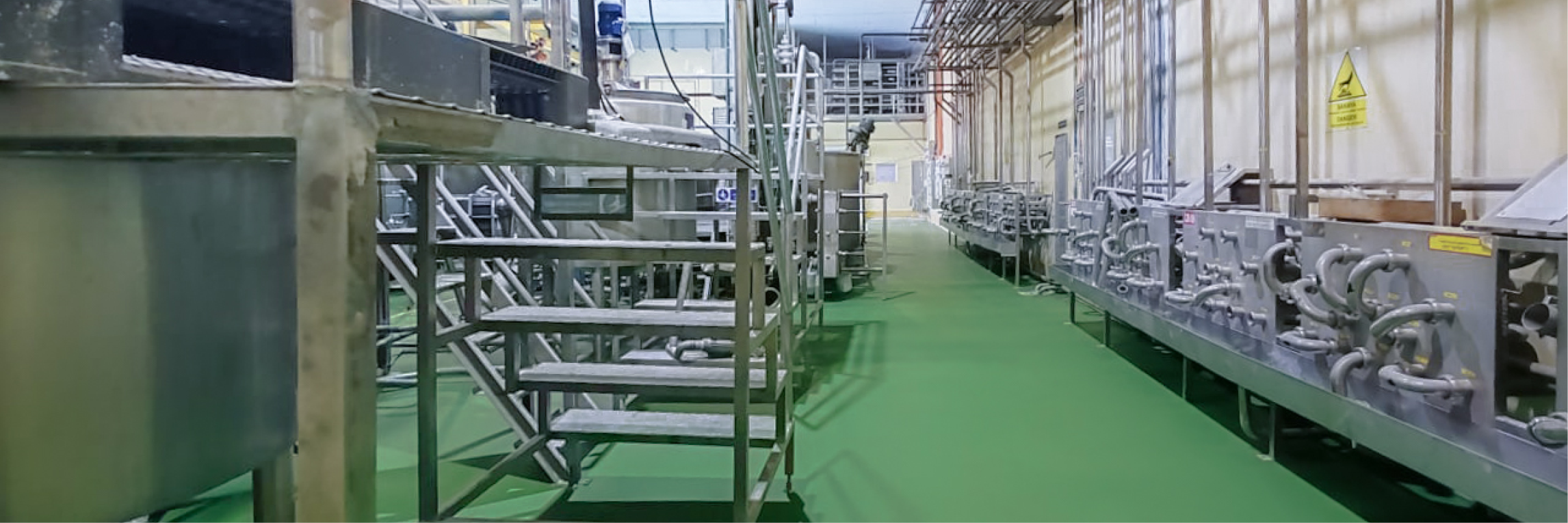
vebrocrete (pf)™ is a high-performance range of polyurethane concrete flooring systems engineered to withstand the toughest demands of food and drink manufacturing.
Built with hygiene, safety, and durability in mind vebrocrete (pf)™ delivers a seamless, easy-to-clean finish that resists heavy traffic, thermal shock, and chemical attack, helping facilities stay compliant while reducing costly downtime.
vebrocrete (pf)™ is trusted across a wide range of food and beverage facilities, including:
From withstanding hot water washdowns to preventing bacterial growth, vebrocrete (pf)™ keeps your operations running smoothly, today, tomorrow, and for years to come.
Engineered for hygiene, durability, and safety, vebrocrete (pf)™ provides a seamless, easy-to-clean surface that withstands heavy traffic, thermal shock, and chemical exposure, reducing downtime and maintenance costs.
Key benefits include:
With vebrocrete (pf)™, you’re investing in a flooring system that supports cleaner, safer, and more efficient operations!
vebrocrete (pf)™ is a next-generation polyurethane concrete flooring system that is completely phthalate-free, making it a safer choice for both people and the environment.
Phthalates are chemicals often used to make plastics more flexible, but they can pose health and regulatory concerns, especially in food and drink production environments.
By choosing vebrocrete (pf)™, you get all the performance benefits of traditional polyurethane concrete – seamless, durable, chemical – and impact-resistant flooring – without compromising on safety or compliance.
vebrocrete (pf)™ delivers the high-performance flooring you need while prioritising health, safety, and sustainability.
| Title | Solutions | Applications | Download | hf:tax:solutions_vp | hf:tax:applications_vp |
|---|
Resin flooring can sometimes be more expensive in the short term than using other materials, this can be as a result of a potential increased cost of materials as well as the outlay for specialist trained resin contractors to install the product, but its durability alone makes it an extremely cost-effective option, as you won’t need to replace it for many years.
And, when you take into account other savings that you can generate as a result of selecting resin flooring, such as reduced maintenance, cleaning and energy costs, it makes sense that an investment now will continue to pay dividends in the long term too!
Demarcation and colour blocking across the floor space can be used in industrial workspaces to notify employees and visitors of workflows, warn of any potential risks, hazards or dangers as well as highlight safe walkways and / or areas that should remain clear and accessible.
Resins are also available in virtually an unlimited palette of RAL colours to complement any floor demarcation processes that you may have in place.
Slips and trips are one of the most common accidents that occur in the workplace, and one of the reasons for this can be unsuitable floor coverings. With a staff body to protect, it is important to consider this when choosing a floor finish, as well as the service criteria that a floor will be subject to.
For example, areas subject to either wet processes, frequent spillages or those that employ rigorous cleaning regimes such as steam cleaning or hot water wash downs should take particular care to ensure an anti-slip finish when replacing floor coverings or coatings.
Liquid-applied resin floor systems are great to custom build any safety features that you require from your floor within your workspace, surface profiles can be tailored to include quartz, aluminium oxide, glass spheres or silicon carbide in order to enhance the slip resistance profile of the floor finish.
With an upper temperature resistance ranging between around 60°C for thinner systems and up to 130°C for those applied between 6.0 mm and 9.0 mm thick, polyurethane concrete can reliably resist hot water washdowns.
For areas facing lower temperatures, such as refrigerators and freezer storage, polyurethane concrete systems are capable of withstanding temperatures below freezing.
Although epoxy, polyurethane and MMA floor systems are able to cope with moderate temperature swings, they are not recommended for processing areas where freezing or boiling conditions are expected.
Resins are seamless in nature and don’t include joints or grout lines, which are susceptible to harbouring dirt, grease, bacteria and stains in general. Dust and dirt can simply be swept, mopped or hoovered away and the floor cleaned according to manufacturer’s guidelines based on the surface profile of the floor.
Resin flooring is also extremely strong and durable, meaning that it has an extended service life compared to other floor coverings. Installed properly, and with the correct maintenance, it can last for years without cracking or peeling, meaning that you won’t have to replace the floor or carry out repairs as frequently than you would if using other materials.
Epoxy, polyurethane, MMA and polyurethane concrete all exhibit good resistance to a range of chemicals associated with cleaning agents or foodstuffs.
For more aggressive chemicals or food & beverages ingredients such as hydrochloric acid, sugars, oils, blood and detergents, heavy-duty polyurethane concrete provides a resistant surface underfoot.
That said, not all chemicals are created equal, so it’s important to check that your choice of flooring material will be suitable for the specific chemicals found in your processes or facility.
Industrial and manufacturing spaces are often subject to heavy loads, equipment and machinery as well as the constant coming and going of rubber-wheeled forklift truck traffic and other punishing processes.
As a result, durability in a flooring material is often critical to avoid the risk of floor failure or the surface wearing far too soon and having the headache of having to replace it all over again!
Epoxy, polyurethane and MMA resin surfaces have a longer lifespan compared to most other flooring solutions. Resin creates a hard, fast bond that is much stronger than just concrete and is highly resistant and able to withstand impact and heavy-duty industrial wear and tear.
Resin also has the advantage of offering a degree of flexibility under stress; this property gives it durability under impact and thermal shock.
The chemical resistance of flooring materials largely depends on a number of specific factors, including the type of chemical, its concentration, and the temperature and degree of surface contact time.
Polyurethane Concrete
Generally speaking, polyurethane concrete systems such as vebrocrete offer a good degree of chemical resistance to a wide range or acids, alkalis, and solvents. For low to medium concentrations of organic acids such as hydrochloric, acetic, lactic and formic, polyurethane systems demonstrate excellent chemical resistance.
However, some stronger concentrations of these types of acid can cause some surface staining, usually without loss of physical strength properties even at elevated temperatures over prolonged surface contact.
Additionally, polyurethane concrete systems offer excellent chemical resistance to solvents and alkalis at low, medium and high strength concentrations at prolonged periods of contact and temperatures with minimal surface staining and loss of physical strength properties.
Methyl-methacrylate
For chemical resistance to high strength organic acids, even with prolonged exposure, methyl-methacrylate (MMA) chemistries such a vebrospeed offer superior resistance against surface staining without loss of physical strength properties. Additionally, MMA systems offer good chemical resistance to a variety of alkalis at various strength and concentrations. However MMA systems are generally not suited to solvents and should be avoided in facilities where solvents will be present.
Epoxy
Epoxy systems, such as various systems in the vebrores range, are generally suited to weak to medium strength acids including organic and inorganic acids like boric and phosphoric, but are not suited to high concentration organic and inorganic acids. Epoxy systems generally offer good chemical resistance to a variety of alkalis at various concentrations, but are more susceptible to attack from medium strength acids at elevated temperatures. Epoxy systems have limited chemical resistance to solvents dependant upon solvent type, temperature and duration of exposure.
For the latest news, info and updates from Vebro Polymers…
East London is fast becoming one of the UK’s most sought-after hubs for data centre development, and Green Mountain’s new-build expansion at its LON-East campus in Romford is
Read MoreVebro is delighted to announce the appointment of Gavin Newby as European Technical Director. This marks a significant milestone in Vebro’s ongoing investment in technical expertise and innovation,

Read MoreCareproof is delighted to have completed a major flooring installation at Huat Lai Resources Berhad’s (Huat Lai) new-build production facility in Melaka, one of the largest producers of
Read MoreVebro Polymers has manufacturing and office headquarters in Manchester, UK and Kuala Lumpur, Malaysia, as well as a number of distribution partners. Please choose your nearest Vebro HQ or distribution location to see local content.